Home ▪
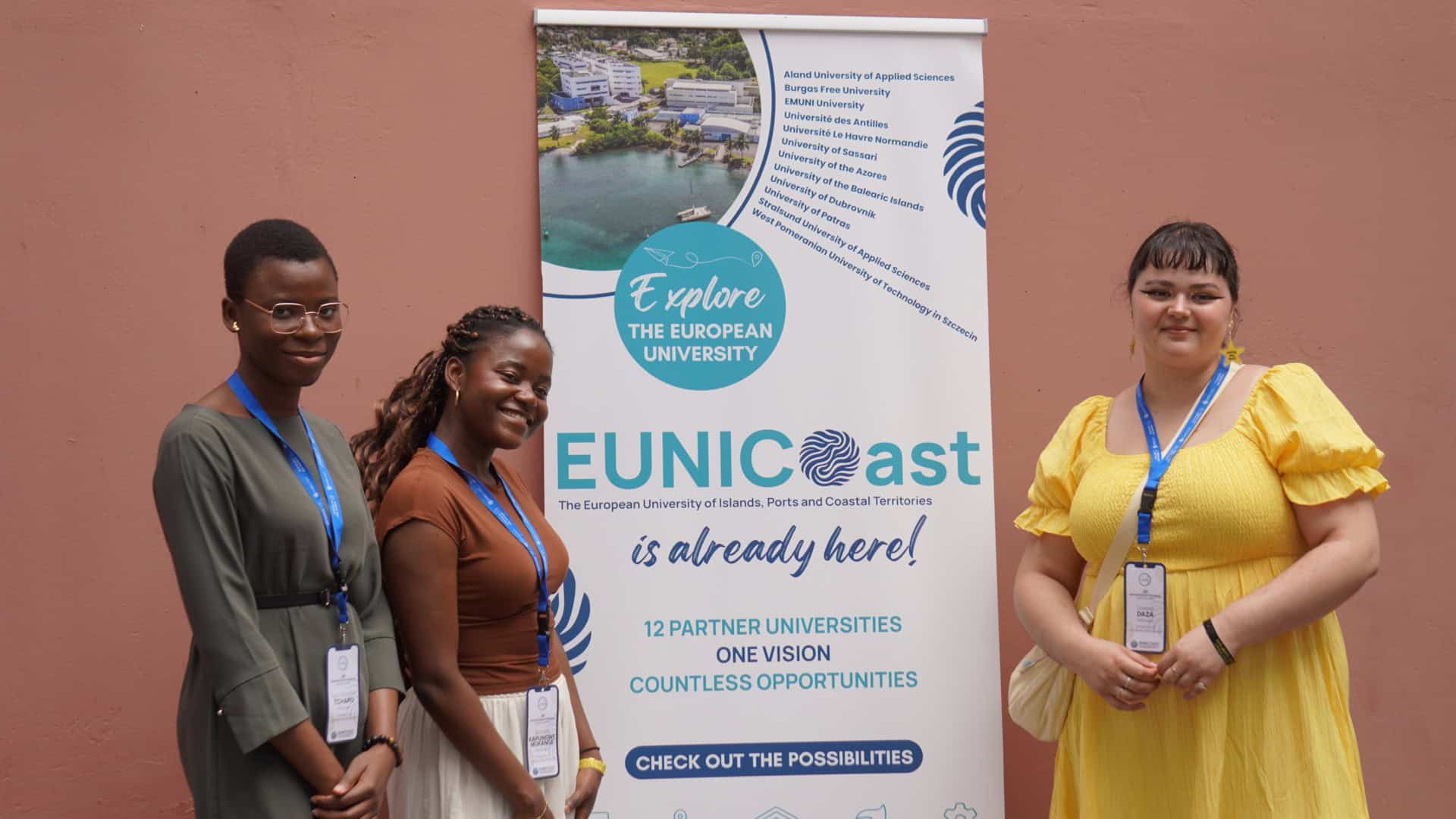
EUNICoast: Three ULHN Ph.D. students welcomed to Guadeloupe for the interdisciplinary doctoral program
Updated on: 15/09/2026


Updated on: 15/09/2026
From June 8 to 12, 2026, the University of the Antilles hosted the “Joint Interdisciplinary Doctoral Workshop,” a week-long training program organized as part of the preparatory phase for the EUNICoast doctoral school. Three doctoral students from the University of Le Havre Normandy participated in the event. They reflect on an experience that was both scientific and personal.
A week of training at the University of the Antilles
The event was held in Guadeloupe, on the campus of the University of the Antilles. It brought together doctoral students and faculty members from several partner universities in the EUNICoast alliance. The five-day program was packed with activities, combining lectures, workshops, laboratory tours, and social events, including a welcome dinner and a visit to the ACTe Memorial in Pointe-à-Pitre.
Research, Ethics, and Interdisciplinary Skills
The program focused on the key stages of a doctoral program. The doctoral students worked on drafting competitive research proposals and explored European funding opportunities. Other sessions addressed scientific integrity and research methodology. Document management tools, open science, and the dissemination of research findings were also presented. A significant portion of the program was devoted to interdisciplinarity. Participants worked on EUNICoast’s priority thematic areas:
Three Ph.D. students from Le Havre, three perspectives
Djébi Blandine Tchapo is a doctoral student in environmental economics at the EDEHN laboratory. What stood out most to her was the interdisciplinary nature of the week. Discussions on marine environments and the proliferation of Sargassum have led her to consider marine pollution as a new avenue for research. “This experience has been particularly enriching, both scientifically and personally,” she says.
Blondele Kapungwe Mukange is a doctoral student in civil engineering. She particularly enjoyed the tour of the University of the Antilles’ laboratories—including the microscopy facility—as well as discovering new methodological tools such as Obsidian and Elicit. “It’s essential to step outside your lab, be open to others, and foster interdisciplinary exchanges, because collaboration and the sharing of ideas remain essential drivers of scientific progress,” she says.
Océane Daza researches cross-Channel mobility and representations of the coastline, at the intersection of space, identity, and politics. She highlights the methodological and comparative value of this week, which has allowed her to situate her research within an interdisciplinary and European framework. “Don’t hesitate to apply—you never know!” she tells prospective applicants from Le Havre.
This week in Guadeloupe is part of the gradual development of the EUNICoast doctoral school. The alliance brings together universities located in island, port, and coastal regions, which face challenges that are often similar despite the distance between them. For the female doctoral students at ULHN, this first meeting provided an opportunity to establish contacts with the University of the Antilles and with other European doctoral students. These connections—both scientific and personal—are expected to enrich their future research and the doctoral program of the alliance as a whole.
